
Category: Uncategorized
-

IDEO’s Desirability, Viability, Feasibility Framework: A Practical Guide
The DVF framework is a product prioritization method that helps teams to evaluate three key aspects of a successful product: desirability, viability and feasibility. This article explores how to use IDEO’s DVF framework to create an innovative design solution from idea all the way through final execution and testing, by utilizing the three key elements…
-

Designing for Social Change: A Quick Guide
Designers have the unique power to create solutions, drive progress and empower people through their designs. By utilizing a design-thinking approach to social change, they can develop strategies that benefit communities in meaningful ways over time. This enables individuals within those societies to take responsibility for creating positive societal shifts on their own terms –…
-

Designing for Social Good: How Designers Can Make a Difference
Designing for social good uses design thinking skills and principles to create a positive social impact on cultural, community, and environmental issues that benefit the greater good. By combining creativity and their knowledge of design principles, designers have the power to create meaningful solutions for social issues that can help make a lasting impact on…
-

Design Thinking vs Design Sprints
The Google Design Sprint and Design Thinking are both effective tools for building digital products, but they serve different purposes. The Design Sprint is best used for quick iterations of existing products, while Design Thinking should be used during the discovery phase to build a knowledge base and explore possible solutions. By combining and leveraging…
-

Design Cycle: An Iterative Design Thinking Model
The iterative design process has a compounding effect. Every time we launch a product, we get the opportunity to learn. When we learn, we get the chance to improve. The Design cycle drives us forward with every iteration and the more we involve our customers, the better our solution will be. Iterative design is a…
-

How to Write a Problem Statement for Design Thinking
In today’s post, I’ll show you exactly how to write a problem statement and give you some practical steps and exercises to start immediately. Let’s dive right in. Related Articles: How to Identify Stakeholders for a Design Thinking Workshop How to Use Personas in Design Thinking Design Thinking: 54 How Might We Examples 100 Tips…
-

100 Tips on How to Improve Your Design Thinking Skills
In this article, you’ll learn how to improve your design thinking skills. You’ll become a better problem solver, a better collaborator, more creative, and most importantly, a better designer. Related Articles: Design Thinking: 54 How Might We Examples How to Identify Stakeholders for a Design Thinking Workshop How to Write a Problem Statement for Design…
-

Design Thinking: 54 How Might We Examples
In this post, you’ll learn how to expand the field of possible solutions by writing inspiring How Might We statements. Let’s get started… Related Articles: 100 Tips on How to Improve Your Design Thinking Skills How to Use Design Thinking to Solve Problems (the Complete Guide) How to Use Personas in Design Thinking How to…
-
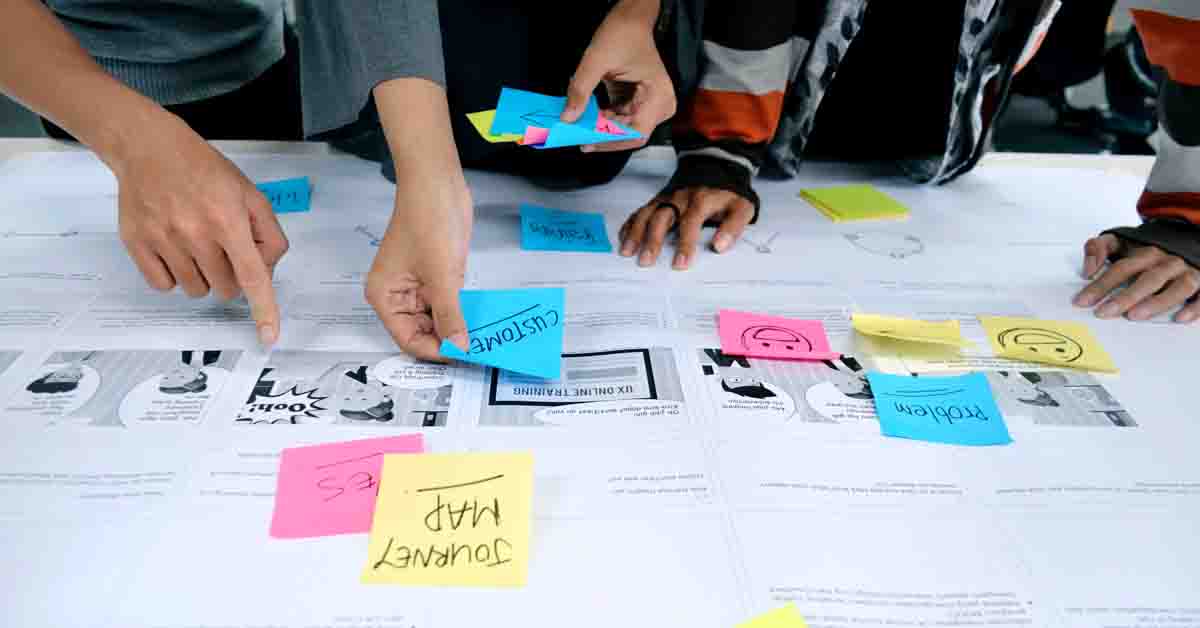
How to Define in Design Thinking
In the Define stage of Design Thinking, we set the direction for our project and make decisions about our focus. Some of the considerations we make are: Who are our customers? What are their goals, needs, motivations, and pain points? What problem will we set out to solve? We make these decisions by analyzing our…
-

22 Creative Ways to Prototype in Design Thinking
Prototyping is a crucial part of the design thinking process, as it allows designers to explore problems and test ideas before committing to full-scale development. In this article, we’ll explore 22 creative ways to prototype in design thinking and get feedback through iteration. 22 Creative Prototyping Ideas 1. Watch a Movie Create a video explainer…