
Category: Uncategorized
-
How to Plan a Workshop: A Quick and Easy Guide
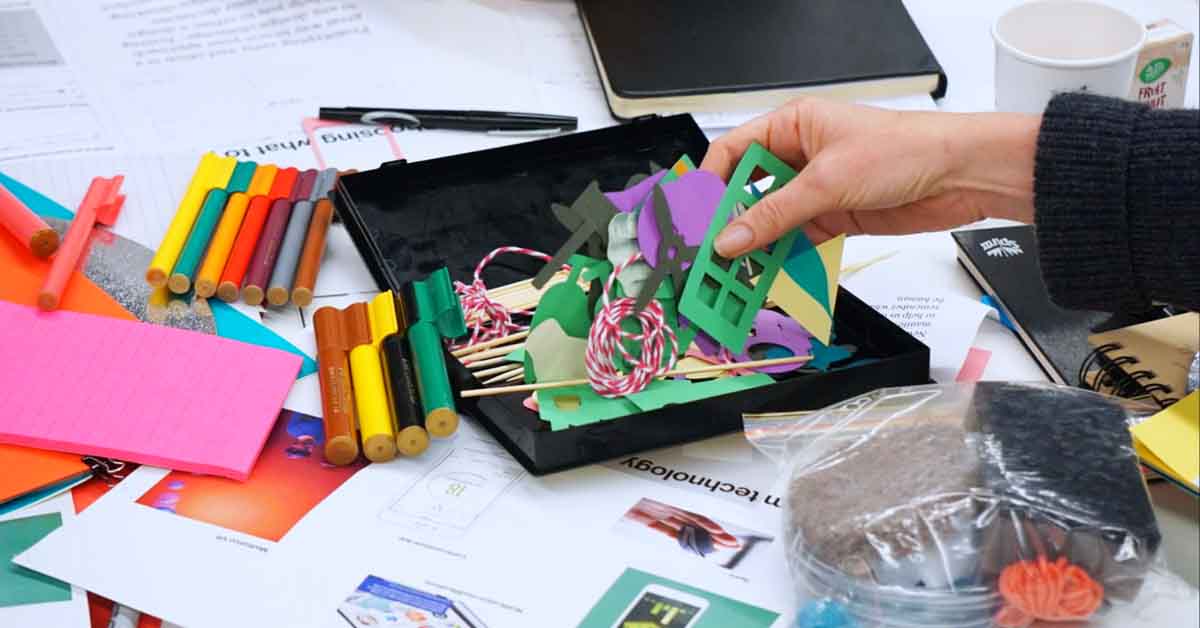
Workshops are a great way to facilitate meaningful discussion and tap into collective wisdom. In this article, we’ll share a framework you can use for any workshop. The Basic Recipe for All Workshops All workshops follow a pattern of divergent and convergent thinking. We diverge by gathering information and exploring options. We converge by evaluating…
-

Design Sprints for Beginners: A Step-by-Step Guide
Design sprints are a fast and effective way to solve complex problems and test new ideas. Whether a product manager, designer, or entrepreneur, you can use design sprints to prototype and test solutions quickly. But if you’re new to design sprints, it can be intimidating to know where to start. Here’s a step-by-step guide to…
-

Quick Guide to Prototyping in Design Thinking
A prototype represents an idea, product, or service used for testing and feedback. They allow designers to explore various options quickly and test ideas before investing too much time or money into a particular solution. In this article, we’ll explore the different types of prototypes and how to get started using them in your project.…
-

How to Prioritize Features in Agile
Effectively prioritizing features ensures you develop the right things for the right people. It can pave the way to product success and provide your time and resources are spent wisely. This article will explore the 7 steps to prioritizing features and then introduce 9 different frameworks for prioritizing features. 7 Steps to Prioritize Features in…
-

IDEO Design Thinking: Process and Practice (The Complete Guide)
IDEO – an influential Design Thinking consulting firm at the forefront of Design Thinking – has become popular for sharing its approach through stories, tools, and techniques. This article will explore the IDEO Design Thinking process and the role that IDEO played in popularizing it. IDEO and Their Role in the World of Design Thinking…
-

What Problems Can Design Thinking Solve?
There are many types of problems in the world, but some seem almost impossible to solve. These complex issues, known as wicked problems, often require an entirely new approach. In this article, we’ll explore what type of problems the Design Thinking process can be effective at solving, and when the method should and shouldn’t be…
-

How to Identify Stakeholders for a Design Thinking Workshop
Your relationships with your stakeholders can make or break your project. In this article, you’ll learn how to identify stakeholders for a design thinking workshop, and how to involve them, so they can help to make your Design Thinking project a success. The secret to success… Is stakeholder mapping. Related Articles: How to Write a…
-

What Is Social Design and Why Is It Important?
What Is Social Design? Social Design is a way of using design to solve complex social problems in society. It’s an approach to design that considers the social implications of things and designs to create positive social change. It builds new democratic relations between places, living beings, and things. Social design is a way of…
-

The Stanford Design Thinking Process
This article will explore how to use the Stanford Design Thinking process to solve complex problems with creative solutions. What Is the Stanford Design Thinking Process Stanford Design Thinking has become a powerful tool for businesses and organizations to solve complex problems with creative solutions. The process helps us to understand people’s needs, empathize with…
-

The 5 Whys in Design Thinking and How to Use Them
Looking to get to the root of a problem? The five whys is an investigative process that delves into cause-and-effect relationships, providing insight and solutions. By asking “why” up to 5 consecutive times, you can uncover hidden patterns in the problem area – revealing its fundamental nature for effective resolution. 5 reasons to use the…